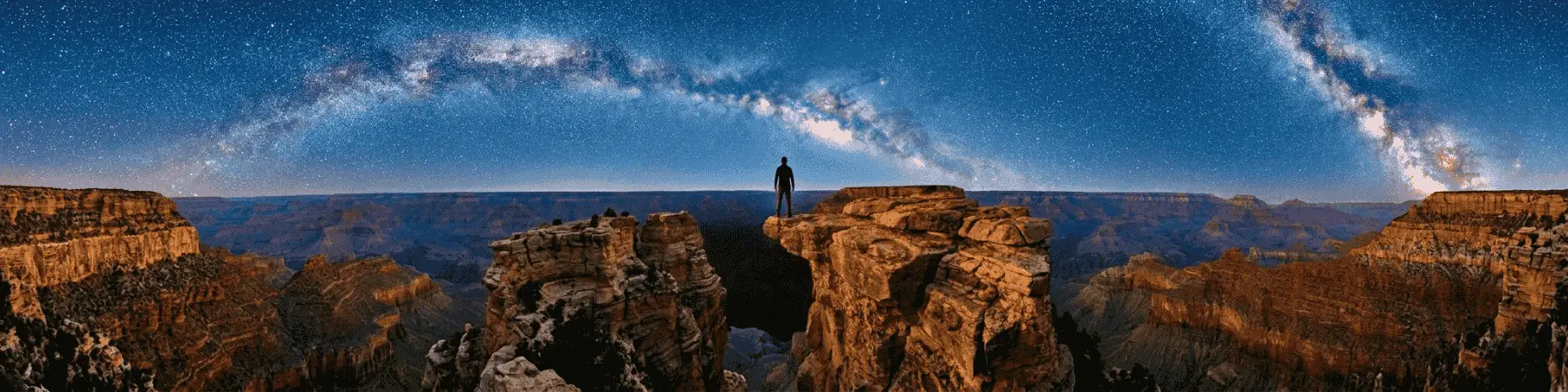
More than two-thirds of Americans have lost the Milky Way entirely. The Milky Way hasn’t gone anywhere of course, but approximately 80% of North Americans can no longer see the Milky Way from their homes due to excessive light pollution. Light pollution erased it slowly and without announcement
The Grand Canyon South Rim dark skies are what remain of the original sky. The Grand Canyon International Dark Sky Park designation is not a marketing title. It is a verified certification that the darkness here is real and protected. The International Dark Sky Park certification gives Grand Canyon National Park support to continue to grow the park’s educational programs and creates economic opportunities for neighboring communities as well through astronomy-based tourism.
Stargazing at the Grand Canyon in Arizona operates at a different altitude than most destinations. The South Rim sits at 7,000 feet above sea level. The atmosphere is thinner, cleaner, and significantly less turbulent than lowland air. Stars do not blur or shimmer the way they do closer to sea level. They hold with a precision that feels almost surgical.
Tusayan, Arizona serves as the tactical entry point for the entire experience. Route 66 Grand Canyon travelers who plan this stop correctly leave with something permanent. The sky above the canyon has been unchanged for a billion years. It does not care about the news cycle or the algorithm.
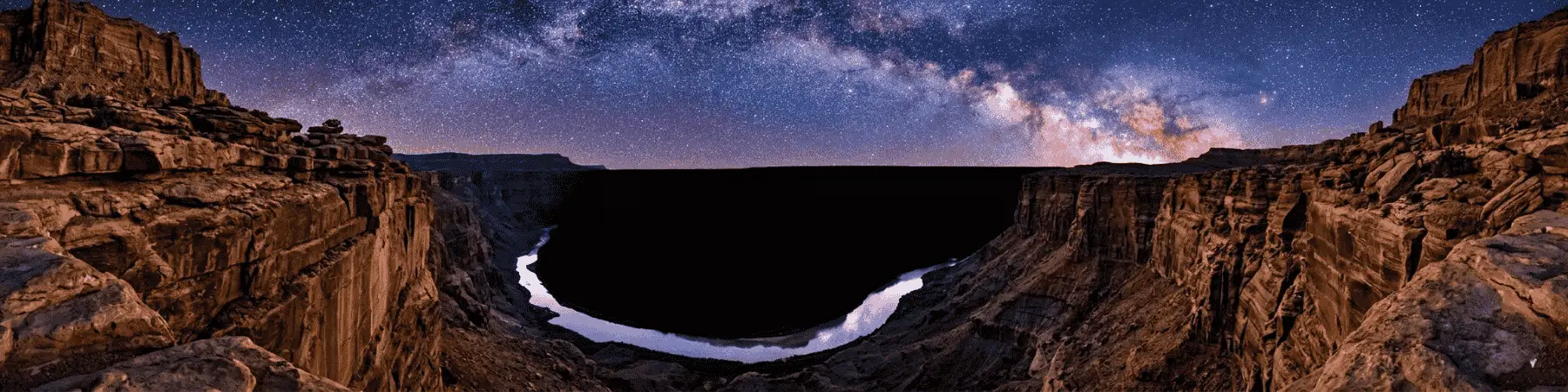
The Grand Canyon Star Party takes place June 6-June 13, 2026 at the Visitor Center at the South Rim. Amateur astronomers from across the country volunteer their expertise and offer free nightly astronomy programs and telescope viewing during this special annual event. The event is free, no reservations are required, but you must have a Park Entry Pass to enter the park of course.
The event begins at sunset, although the best viewing is after 9 pm and many telescopes come down after 11 pm; however, on nights with clear, calm skies, some astronomers continue sharing their telescopes into the night. The evening programs start at 8 pm featuring guest speakers outdoors at the plaza in front of the South Rim Visitor Center. Arrive early, bring folding chairs, blankets or cushions to sit on, and park in Parking Lots 1-4. Lot 4 provides the nearest accessible parking and the evening program, constellation tours, and at least one telescope are wheelchair accessible.
Red flashlights are recommended. White flashlights and cell phone lights are discouraged on the telescope lot. Create your own red flashlight by covering any flashlight with red cellophane; a limited supply of cellophane and rubber bands are available prior to the evening presentations at the Grand Canyon Visitor Center. You can also paint the flashlight lens with red nail polish or a red magic marker.
After the evening guest speakers, follow the red rope lights to the telescope viewing area. The South Rim Star Party is sponsored by the Tucson Amateur Astronomy Association.
Visit the NPS Grand Canyon Star Party page for complete information.
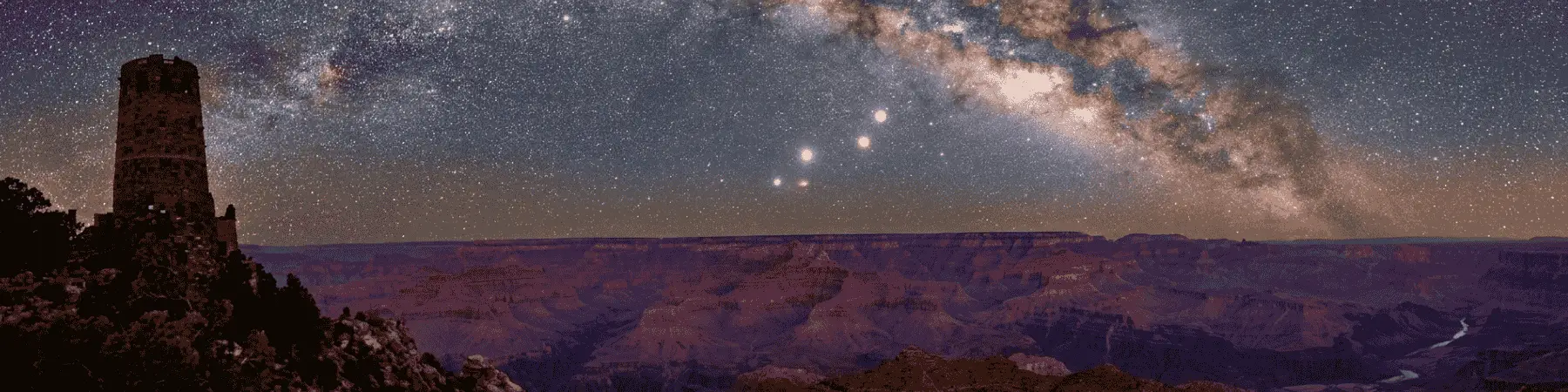
The Annual Grand Canyon Star Party is one option — but stargazing at the Grand Canyon is available any night of the year inside the park. No special event required. See the best Stargazing Viewpoints at the South Rim of the Grand Canyon National Park below.
The town of Tusayan is the last town just before the Grand Canyon South Rim, located about 1 mile from the South Entrance. Tusayan is the perfect basecamp for any Grand Canyon and Northern Arizona visit, and offers Dining, Lodging, Tours, Gift Shops and more. Check out our Boarding Pass Partners in Tusayan and the Grand Canyon Area for discounts and Special offers.
DRIVING DISTANCES
Alburquerque, NM 410 miles Google Map
Flagstaff, AZ 82 miles Google Map
Kingman, AZ 168 miles Google Map
Las Vegas, NV 275 miles Google Map
Los Angeles, CA 486 miles Google Map
Phoenix, AZ 224 miles Google Map
Sedona, AZ 113 miles Google Map
Williams, AZ 55 miles Google Map
When a Grand Canyon park pass gets purchased before arrival, it does more than save time at the gate. It keeps the entrance lines shorter for every visitor behind. The National Park Service depends on advance sales to manage capacity and protect the canyon experience for everyone who follows.
Pick up the pass at Buck Wild Route 66 Travel Center on Highway 64 in Tusayan. Cash accepted. No Waiting. No stress. Purchase the park pass online and pick it up at Buck Wild, or just stop in and purchase in person.